
Rock Identifier Online:
Identify Any Rock by Photo Free
Start Your Identification
Upload a clear photo of your finding to begin the automatic scan.
Drag & Drop your rock photo
or click to browse from your device (JPEG, PNG, WebP)
How to Identify Rocks in Seconds
Using Rocknify is simple. Our advanced AI does the heavy lifting, providing professional-grade mineralogy analysis on your smartphone.
Capture or Upload
Take a clear photo of your rock or mineral, or upload an existing image from your gallery.
Geological Analysis
Our advanced analysis engine evaluates thousands of visual data points to identify the specimen's unique geological markers.
Get Results
Receive instant details on the rock's name, scientific classification, formation process, Mohs hardness, and similar specimens.
Expert Analysis Tools
We provide more than just a name. Get detailed reports on scientific classification, formation process, and specimen hardness.
Detailed Identification
Identify a wide variety of rocks, minerals, and gemstones with professional AI precision.
Technical Data
Get scientific classification, geological category, and Mohs hardness for every finding.
Formation Process
Learn how your rock was formed over millions of years through complex geological processes.

15 Rock Identification Tests You Can Do at Home
Most people think rock identification needs a lab. It doesn't. A coin, a nail, a piece of porcelain tile, and a drop of vinegar are all you need to run the same tests professional geologists use in the field. Here are 15 of them — every one doable at your kitchen table.
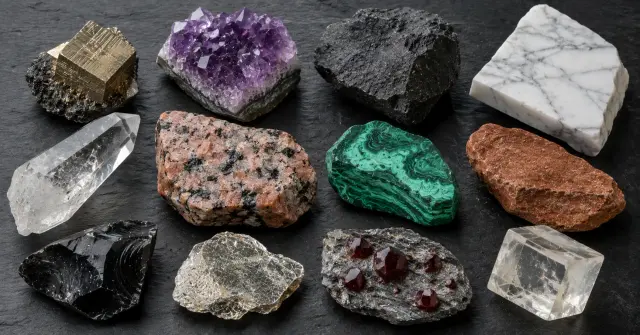
25 Common Rocks and Minerals You Can Easily Identify
You don't need to know thousands of minerals to get started — just these 25. They account for the vast majority of what you'll ever pick up on a walk, hike, or beach. This guide covers 15 common minerals and 10 common rocks, with the key identification clues that matter most in the field.

Rocks vs Minerals vs Stones: What's the Difference?
"Rock," "mineral," and "stone" get used interchangeably every day — but in geology, each one means something different. Minerals are pure substances, rocks are mixtures of minerals, and stones are usually just smaller pieces of rock. Here's how to tell them apart for good, with simple examples you'll actually remember.
Frequently Asked Questions
Everything you need to know about our rock identification technology and geological database.